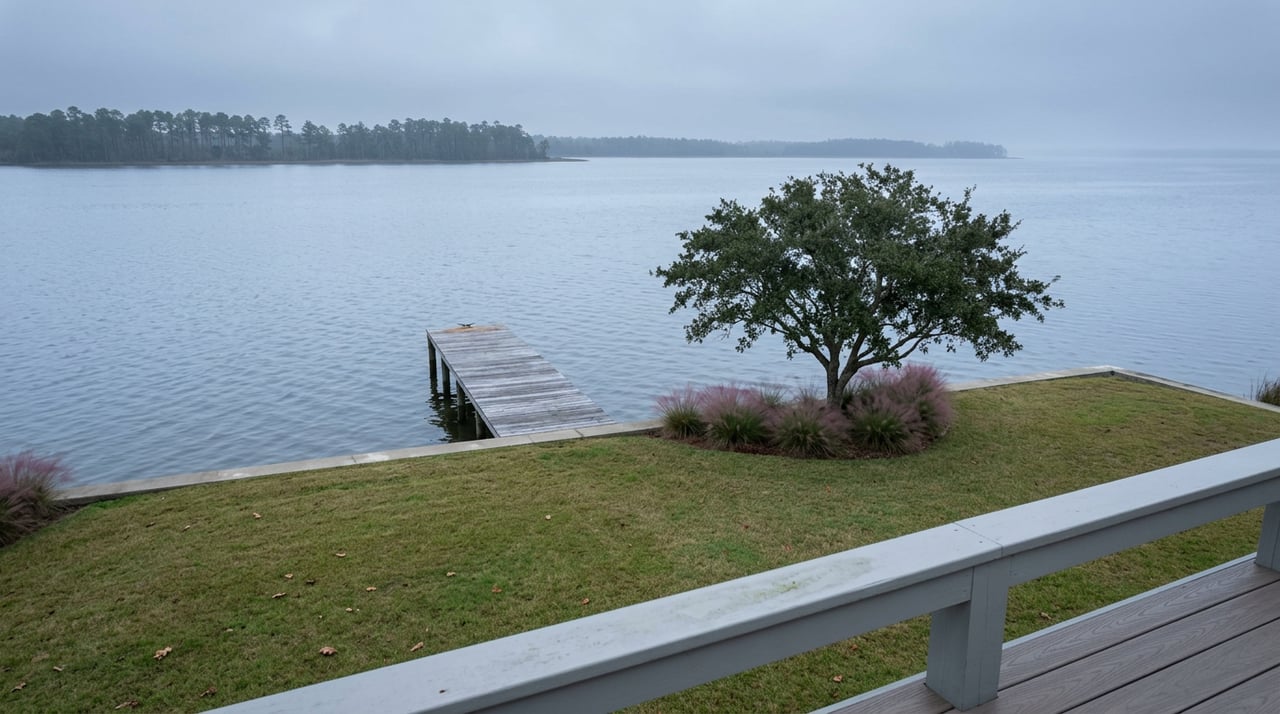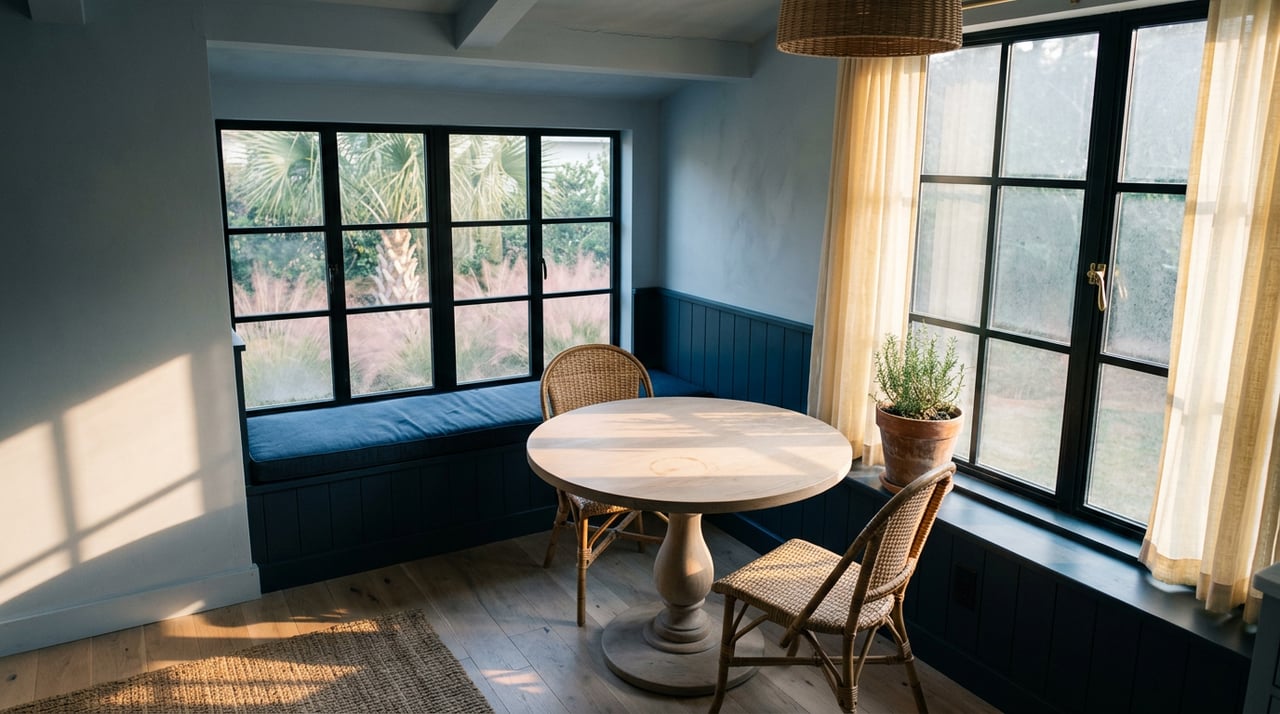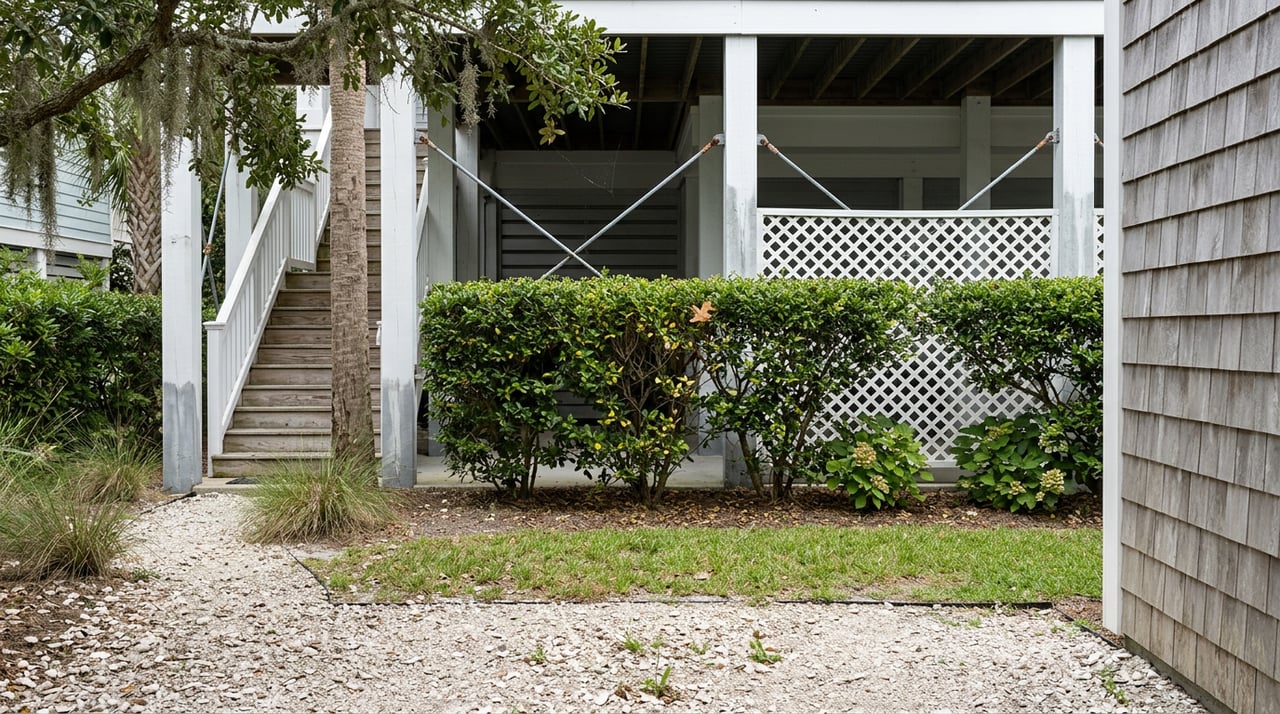
A listing at 9 West Fayetteville Street sums up the whole puzzle of buying oceanfront property here. The house itself is a grandfathered duplex cottage, two separate three-bedroom units sleeping twelve between them, sitting three houses from public sound access and a block from the beach. But the marketing does not lead with the cottage. It leads with the lot: 5,000 square feet, currently home to something called the Blue Zone house, being sold as much for what could replace it as for what stands there now.
That framing is not a sales gimmick. It reflects something specific to how Wrightsville Beach works. The value of an oceanfront parcel here does not track cleanly with the condition of the house on it. It tracks with a setback calculation that shifts over time, a property line drawn in 1939 that still governs part of the island, and a 50 percent rule that decides whether a storm-damaged or dated structure can be touched at all. Most buyers evaluate a lot by walking it and looking at comps. Few ask when it was last surveyed for setback purposes, and that question matters more than the finishes inside.
The setback is a formula, not a line on a plat
North Carolina's oceanfront construction setback is not a fixed distance you can look up once and rely on for the life of your ownership. Under the Coastal Area Management Act, it is calculated as a setback factor multiplied by the site's long-term average annual erosion rate, with the factor scaling from 30 times the erosion rate for structures under 5,000 square feet up to 90 times for the largest buildings. That policy has been in effect since August 11, 2009, and it is measured landward from the first line of stable, natural vegetation, or from a pre-project measurement line where one applies.
The part that surprises buyers is timing. A setback determination is made when development is proposed, not when the lot last changed hands. If the shoreline has moved since your last plat survey, so has your buildable envelope, and nobody adjusts that number for you automatically. The NC Department of Environmental Quality is currently reviewing a 2025 update to those erosion rates and setback factors, but as of today it has not taken effect. That means every setback quoted to a Wrightsville Beach buyer in 2026 is still running on the factors the Coastal Resources Commission approved back in 2019, even though a newer analysis is already sitting in front of the same commission. The rule you are being told applies right now is one the state's own regulators already consider due for revision.
Wrightsville Beach adds a line of its own
Layer a town-specific wrinkle on top of the state formula. Between Masonboro Inlet and Heron Street, the town treats the 1939 property line as the eastern boundary of the lot, and whichever setback is more restrictive, the town's zoning setback or the CAMA setback, controls. That can shrink the usable building area on a parcel more than an owner or buyer expects, and it only shows up if someone checks before design work starts, not after. Add the town's 40-foot height cap, measured from the centerline of the street rather than from grade, and a stormwater permit requirement that kicks in once a project adds more than 500 square feet of new impervious surface, and you have three separate ways a lot's real potential can differ from its apparent size on a listing sheet.
None of this means a given lot is bad. It means two parcels that look identical from the street, similar square footage, similar distance from the water, similar asking price, can carry entirely different rebuild rights depending on which side of that 1939 line they fall on and how recently the shoreline was measured.
The photo tells you what the house looks like. The setback tells you what the lot is allowed to become. Most people never ask to see the second one.
The 50 percent line that forces the issue
Here is the mechanism that actually triggers all of this in practice. Under both state guidance and the town's own flood ordinance language, if the cost of repairing storm damage, or the cost of a renovation, equals or exceeds 50 percent of the structure's assessed tax value or a certified appraisal, and this is the value of the house alone, not the lot, deck, or furnishings, the project is treated as a full rebuild. A full rebuild means a CAMA permit and full compliance with every current regulation, including whatever setback applies today, not whatever applied when the original cottage went up decades ago.
That threshold is why some of the older, original-condition cottages on the island sit untouched for years even as the market around them modernizes. Push past that 50 percent line and the owner is no longer renovating a beloved beach house. They are negotiating with the full current rulebook, on a lot that may or may not still meet it. For a property within an Area of Environmental Concern, which covers both the Ocean Erodible Area and the Estuarine Shoreline here, disturbing more than 200 square feet also requires a CAMA Minor Development Permit. Minor permits are supposed to be issued within 25 days of a complete application. Major permits, the kind triggered by larger rebuilds, can pull in review from ten state agencies and four federal ones, a timeline that has nothing to do with how fast a buyer wants to close.
A beach that gets refreshed on a schedule the paperwork doesn't follow
Wrightsville Beach completed its most recent federal beach nourishment project in 2024, and the town's next scheduled renourishment is not until fiscal year 2028, according to reporting on Cape Fear beach projects earlier this year. That four-year gap matters because the erosion rate feeding the CAMA setback formula is a long-term average, calculated over 50-plus years of shoreline change, not a snapshot of how wide the beach looks after a truck dumps fresh sand on it. Nourishment changes what a walker sees at the tideline. It does not reset the erosion-rate math a permit officer uses to measure your setback. Those are two different clocks, and a buyer standing on a freshly nourished beach in 2026 is not necessarily standing on a lot whose official setback reflects that improvement.
What this actually separates in price
| Legal-conforming lot | Legal-nonconforming lot | |
|---|---|---|
| Typical listing framing | Sold on the house and the water | Sold on the lot's potential, house is secondary |
| Storm damage response | Can rebuild to current standards | May be capped at repairs under 50% of value |
| Renovation ceiling | Full remodel and expansion generally available | Any major work risks triggering full setback compliance |
| Reported price range | Larger water-view homes often run $2 million to $5 million-plus | Original-condition cottages have started around $800,000 to $1.2 million |
Those price bands are not a coincidence of age or finishes. They reflect how much flexibility the underlying lot has left, and buyers who only compare square footage and photos are pricing the wrong variable.
What to verify before you fall for the lot
A buyer who wants the real answer, not the listing photo's version of it, should ask their agent to pull the CAMA permit history on the parcel, confirm whether the property sits in the Masonboro Inlet to Heron Street stretch where the 1939 line applies, and find out when the site was last surveyed for setback purposes. An elevation certificate and a conversation with the town's Planning and Inspections office answer most of what a listing sheet leaves out. This is exactly the kind of groundwork Ronel Austin walks clients through before they get emotionally attached to a lot that photographs beautifully but may not build the way they picture it.
FAQ
If a Wrightsville Beach home is destroyed by a storm, is the owner guaranteed the right to rebuild? No. The lot must meet the setback in effect at the time rebuilding is proposed. If it cannot, the owner cannot rebuild until conditions change, though they may hold the lot in case future shoreline data makes it buildable again.
Does a recent beach renourishment project improve my setback calculation? Not directly. The setback factor is based on a long-term average erosion rate spanning 50-plus years. A single nourishment cycle changes the visible beach without resetting that underlying math.
What if repair costs come in under the 50 percent threshold? Repairs can generally proceed in place without triggering full current-code compliance, though some deck and structural repairs may still be limited at the building inspector's discretion.
If you are weighing a Wrightsville Beach purchase and want someone who checks the setback history before you fall in love with the view, reach out to Ronel Austin. Let's Connect.